Welcome to PossibNow. This is a place to learn what AI can help you do, try it on work that matters, and keep the methods that prove useful. In this issue, you’ll give Dots the preparation for a first conversation, check the research and proposed questions, and keep a working page in ChatGPT Space with instructions you can reuse for the next organization.
A startup wanted to talk with me about a possible partnership or advisory role.
It would be our first conversation. Before the coffee meeting, I wanted background on the founders, a better understanding of the product, and topics worth discussing.
I asked Dots to start that workflow and generate work in Space for me to use later.
In my use, it still feels very beta. Lots of bugs. But I liked having my work together. I didn’t have to copy and paste or pull work from other places.
That experience gives me a reason to pay attention to OpenAI’s Dots and Space releases. OpenAI is doubling down on it’s mission to become the place where more of our work happens, from the assignment through the working documents.
For this week’s build, use that combination to prepare for a first conversation. Research the people and organization, turn the findings into useful questions, and keep the preparation somewhere you can return.
This week’s loop
Learn: Understand how an ongoing agent and an editable workspace fit together.
Use: Delegate research and preparation for a conversation.
Build: Keep a prompts, a preparation page and an assignment you can reuse.
Learn: what changed that matters
Dots coordinates ongoing work. OpenAI’s Dots is an agent that can research, prepare documents, and delegate work. It can also carry relevant context forward between conversations.
Space gives the work a home. The Space canvas is editable pages, related spaces, and subpages for supporting material. You can work on a page with ChatGPT and other people.
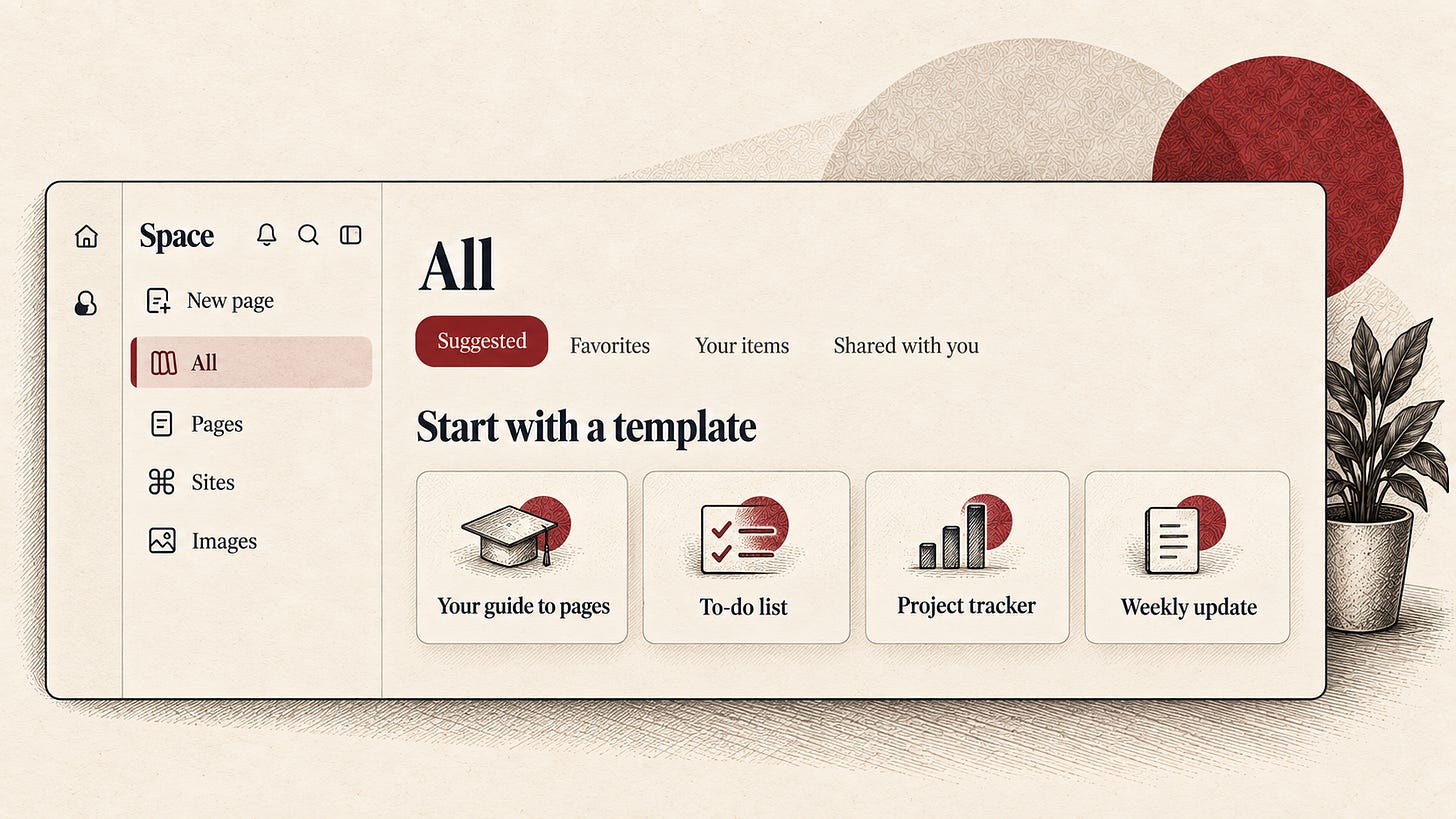
The editable documents invite a Google Docs comparison. The pages and subpages invite a Notion comparison. I find the combination with an ongoing agent more interesting. You can turn research into a working page and ask ChatGPT to revise it.
For professionals already using ChatGPT, that makes the product worth examining beyond the next model release. An agent that coordinates the assignment and keeps its context available could reduce the work of moving information between tools. That is the appeal I found in my own use.
It is clear that OpenAI wants more of the workflow inside its ecosystem. The attraction comes from continuity. The tradeoff is putting more of the working process under one provider. I would test one useful assignment before reorganizing a whole practice around a new release.
Futurepedia’s early-access walkthrough shows Dots coordinating work across several tasks. It also reports cloud-browser and scheduled-task glitches. It’s still early days, but a good video walk-through.
Keep this: Give the agent a clear assignment and a named home for the result.
Use: do this on real work this week
Before you start. For this example, choose a first conversation with a prospective client, employer, supplier, collaborator, or adviser. This could also easily be a meeting prep workflow. Identify the people, the organization, and what you hope to understand. Start with any websites and the profiles you know belong to the participants.
Check Dots setup and access and the Space guide for your account. These features are rolling out, and connecting an app gives different access from connecting your computer. This research assignment can start with public sources and specified context.
If Dots or Space is unavailable, give the same assignment to a research-capable assistant and ask for the preparation as text in your existing document tool. Carry the reviewed result into the next conversation yourself.
The first prompt labels the six parts of CRAFTS. The follow-ups use the same framework in natural prose. These prompts propose a reusable version of my assignment.
Do it.
-
Name the purpose and destination. Tell Dots who you will meet and why. Create or name the Space where the work should go. A first conversation about possible advising needs different preparation from a product demo or job interview.
-
Assign the whole preparation. Replace the brackets with your context.
Context
I have a first conversation with [people] at [organization] about [purpose]. Start with [websites and profile links] and relevant context from [specified notes, chats or connected files].
Role
Act as my research partner for this conversation.
Action
Research the people and product. Connect your findings to my purpose and propose questions worth discussing. Distinguish company claims, independent evidence, interpretations and unresolved questions.
Format
Create [organization] first conversation in the Space [name]. Put a concise conversation guide at the top, with deeper research on people, product and sources in linked subpages. Include source links and dates where available. Return the page link and any unfinished work.
Tone
Write in plain, neutral language. Keep the conversation guide concise.
Safeguards
Confirm identities before combining profiles. Use public sources and the context I identified; tell me if you cannot access an input. Preserve thin or conflicting evidence as a gap with a question. Keep the work for my review. Do not contact anyone or make commitments. Do not make assumptions.-
Open the saved page. Check the destination itself. Start with the person and product identities, then follow a few important claims to their sources. If the page is incomplete or missing, ask Dots to finish the specific missing work.
-
Make the questions fit your purpose. For the startup conversation, I would want questions about the problem the product addresses, the evidence behind its claims, and what the founders hope a partner or adviser would contribute. Those are proposed topics for this workflow.
An assertion that the product saves customers time should lead you to the supporting evidence or a question about how the company measures that claim. A founder’s earlier role may suggest relevant experience; it does not establish that the new product works.
Use this follow-up if the first questions sound generic.
Use the preparation on this page for [specific conversation purpose]. Continue as my research partner.
Prioritize questions that could change my view of the opportunity.
Explain why each belongs and remove generic questions.
Revise the conversation guide at the top of the same page. Keep the supporting research and source links available below it.
Keep the questions concise, neutral and natural to ask in conversation. Preserve source qualifications and unresolved conclusions. Do not invent relationship terms or assume agreement. Revise only this page.- Prepare the version you will use. Keep a short conversation guide on the main page, with the deeper research one level below. You should be able to explain why a question matters and find the evidence behind it.
Check it. Confirm that the research concerns the right people and current product. Look for company assertions presented as established facts, old descriptions treated as current, and questions that assume a partnership already exists.
If a founder’s identity remains ambiguous or the product has little public evidence, keep the uncertainty visible and ask about it in the conversation. Avoid filling the page with a confident story about a company you have not met.
Before sharing the page, read what it contains. Information copied from a private source becomes visible to people who can view the page, even if they cannot open that source.
Keep this: Judge the preparation by the questions and source checks it helps you make.
Thanks for reading What AI makes PossibNow! Subscribe for free to receive new posts and support my work.
Build: something you can keep
Rung 1, this week. Keep the reviewed preparation and a reusable instruction page. Ask Dots to separate the method from the company research.
Use the reviewed preparation method to help me prepare for future first conversations with other organizations. Act as my workflow editor.

Extract the useful research, question-selection and review steps. Replace company-specific facts with placeholders. Include a reusable CRAFTS prompt that covers all six elements.

Create First-conversation preparation in this Space. Include required inputs, the reusable prompt, the page structure and a review checklist. Keep this instruction page separate from the organization's research.

Write clear, practical instructions another professional can follow. Remove private and company-specific details from the reusable method.
Keep source verification and action boundaries in the instructions.
Distinguish proposed steps from steps we have tried. Do not describe the method as tested unless our review record supports that claim.
Rung 2, next week. Use those instructions for a different organization and purpose. Check whether the questions change with the relationship. Correct any instructions that produce generic research or mix the two organizations.
Rung 3, when you are ready. For a relationship that continues, add your own conversation notes and request a revision based on what you learned. Keep pre-meeting assumptions distinguishable from what the participants told you.
Space’s agent guide explains how to ask ChatGPT or a dot for changes alongside or within a page. Keep Updated is unavailable at launch, so adding a page or a cadence does not establish automatic updates.
Keep this: Save a reusable preparation method beside the research it helped produce.
This week, in order
-
Choose one upcoming conversation.
-
Identify the participants, purpose, and source links.
-
Assign the research and name its Space destination.
-
Open the page, check identities, and inspect important claims.
-
Refine the questions and save the reusable instructions.
Dots does the prep for your next meeting.
Thanks for reading What AI makes PossibNow! Subscribe for free to receive new posts and support my work.
Get the next one on Friday.
Applied AI for professionals, by Sal Carranza. One workflow a week, free.